
Showing posts with label feast. Show all posts
Showing posts with label feast. Show all posts
Sunday, December 25, 2011
Blessings
I hope all of my readers have a blessed Festivus, Christmas, Hanukkah, Solstice, Saturnalia, Sol Invictus, Kwanzaa, or anything else you might celebrate.


Thursday, December 22, 2011
Yule
 Yule is one of my favorite holidays. It was originally a Germanic holiday celebrated for twelve days, starting on the winter solstice.
Many decorations are the same as the Christian ones, because the traditions were adopted by them in an effort to sneak-save the Germanic pagans. As a result it is one of the two holidays that pagans who have not announced what they believe to decorate their homes in their own traditions.
In Germanic mythology Odin disguised himself with a long blue cloak and traveled to earth on his eight-legged horse. Once he arrived he would watch for people gathered around campfires to see how content the people were, and who was hungry. He left gifts of food for the hungry, then disappeared. Over time, the children began to anticipate his arrival and filled their boots with straw, carrots or sugar. Odin rewarded the kind children by replacing the food with gifts and treats inside the boots.
Many Wiccans celebrate the birth of the Great Horned Hunter God, who they view as the newborn sun. Other rituals are the death of the Holly King and the birth of the Oak King.
In Greek mythology, Demeter is looking forward to Persephone returning and winter begins to loose its hold.
Personally, I decorate my small tree and give gifts to my immediate family, including my pets. I would also extend this to aunts, uncles, and cousins, but I'm too poor to buy over 50 presents every December. I also have dinner with family on Christmas (since they are Catholics), followed by watching a movie or playing a group game like Trivial Pursuit or Rock Band.
Monday, October 31, 2011
Samhain
Samhain is one of my favorite holidays. I love the macabre, so this holiday is perfect for me.
Samhain is a festival of the dead. It is believed that in this day the barrier between the world of the living and the world of the dead is at its thinnest, and the deceased can return to visit. It begins on October 31 at sunset, and ends on November 1 at sunset.
Adult Traditions include setting aside a plate of food for the dead, setting up Ancestor Shrines, carving Jack O'Lanterns, Zombie Walks, and cosplaying.
This year I will be carving two Jack O'Lanterns. There is a third and fourth pumpkin that were purchased, but it can't be used as a Jack O'Lantern since they don't have flat bottoms.
A new tradition I recently discovered sounds like fun. It's called All Hallow's Read. The idea is to get a scary book and leave it for someone to find and read. You can buy it new, used, in ebook format, as an audio book, and sometimes even at the library. I don't know if every library does this, but my local library will take donated books that others don't want and put them in a box. People are free to take the books out of the box and keep them at no charge.
Samhain is a festival of the dead. It is believed that in this day the barrier between the world of the living and the world of the dead is at its thinnest, and the deceased can return to visit. It begins on October 31 at sunset, and ends on November 1 at sunset.
Adult Traditions include setting aside a plate of food for the dead, setting up Ancestor Shrines, carving Jack O'Lanterns, Zombie Walks, and cosplaying.
This year I will be carving two Jack O'Lanterns. There is a third and fourth pumpkin that were purchased, but it can't be used as a Jack O'Lantern since they don't have flat bottoms.
A new tradition I recently discovered sounds like fun. It's called All Hallow's Read. The idea is to get a scary book and leave it for someone to find and read. You can buy it new, used, in ebook format, as an audio book, and sometimes even at the library. I don't know if every library does this, but my local library will take donated books that others don't want and put them in a box. People are free to take the books out of the box and keep them at no charge.
Friday, September 23, 2011
Autumn Equinox
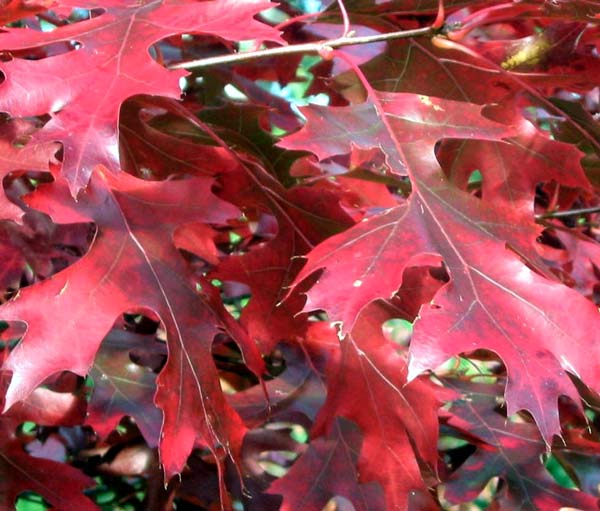
It is in our nature to begin to slow down at this time of year. Especially those of us who are of northern European descent. It gets very cold in the northern parts of the world, and conservation of energy is important. We need the energy to help keep us warm in sub-zero temperatures.
Once the harvest is done, there is still work to do. This is the time to can food, or freeze it, so extra is available during the cold winter. Even though humans (for the most part) no longer rely on storing everything we need over the winter, it is still a good idea to have a lot stored. If there's a natural disaster (such as a blizzard) that prevents you from going to the store to get food, you already have plenty on hand.
This time of year is associated with Persephone returning to her husband, while her mother begins to neglect the duties she is commanded to perform.
Sunday, July 31, 2011
Lammas

Lammas (which translates to loaf-mass) is the first harvest festival of the year, and is when the wheat is traditionally harvested.
It is also called Lughnasadh (a pre-Christian term), a traditional Gaelic harvest festival celebrated annually on August 1. In Irish mythology, the festival was started by Lugh (an ancient Hero of Ireland). It was in memory of his foster-mother, Tailtiu, who died from exhaustion after clearing land for agriculture.
It is also called Lughnasadh (a pre-Christian term), a traditional Gaelic harvest festival celebrated annually on August 1. In Irish mythology, the festival was started by Lugh (an ancient Hero of Ireland). It was in memory of his foster-mother, Tailtiu, who died from exhaustion after clearing land for agriculture.
In modern times, this holiday is celebrated in a number of different ways and with different names. This is a traditional time for handfastings, along with Beltane.
Living in Montana, I still have an association with harvest. Especially wheat, which is grown in the area. I don't have a tradition at this time, but I am considering making bread in honor of the harvest.
Living in Montana, I still have an association with harvest. Especially wheat, which is grown in the area. I don't have a tradition at this time, but I am considering making bread in honor of the harvest.
Tuesday, June 21, 2011
Summer Solstice
 The Summer Solstice is the longest day of the year, and the first day of summer. On this day the sun appears to stand still, before moving the opposite direction as the days grow shorter again.
Humans have placed a spiritual significance since they first noticed the sun standing still. Celts celebrated by starting bonfires to help the sun keep energy. Chinese held the festival of Li, who was the Chinese Goddess of light. Some Wiccans believe that the Goddess is at the height of her power and fertility on this day. Other Wiccans believe this marks the marriage of the Goddess and God.
Personally, on this day, I sit on the porch or balcony on the building I live in, and just enjoy the warmth of the sun.
Sunday, May 1, 2011
Beltane

Pagans observe Beltane, or May Day, in a variety of forms. They may also use a different word for the festival. Pagans vary by tradition, and as a result this holiday means different things to different people.
Celtic Reconstructionists place emphasis on historical accuracy. Their celebrations are based on rituals and traditional lore from the surviving Celtic cultures, as well as researching older beliefs of polytheistic Celts. They usually celebrate Beltane (they call it by its Gaelic word, Lá Bealtaine) when the local hawthorn trees are in bloom. If those aren't available, they choose the full moon that falls closest to the event. Many observe the traditional bonfire rites, depending on their location and what the fire hazard level is. Some decorate May Bushes and prepare traditional festival foods.
Wicca, and the pagan religions that are similar to it, celebrate Beltane as a Sabbat. Although they use the name Beltane, which is Gaelic in origin, their festival is closer to the Germanic May Day festival. This festival focuses on fertility, even going so far as to enact a ritual union between the May Lord and May Lady (or Goddess and God, as Wiccans are duotheistic). They consider this a cross-quarter day, celebrated roughly halfway between Ostara and the Summer Solstice.
This is a good time to plant seeds, even in the northern part of the world. If you're living in the north, where there's still snow or at least it's a possibility until May, you can plant your seeds indoors with a heat lamp and transfer them to the outdoor garden after the cold season is completely over.
Celtic Reconstructionists place emphasis on historical accuracy. Their celebrations are based on rituals and traditional lore from the surviving Celtic cultures, as well as researching older beliefs of polytheistic Celts. They usually celebrate Beltane (they call it by its Gaelic word, Lá Bealtaine) when the local hawthorn trees are in bloom. If those aren't available, they choose the full moon that falls closest to the event. Many observe the traditional bonfire rites, depending on their location and what the fire hazard level is. Some decorate May Bushes and prepare traditional festival foods.
Wicca, and the pagan religions that are similar to it, celebrate Beltane as a Sabbat. Although they use the name Beltane, which is Gaelic in origin, their festival is closer to the Germanic May Day festival. This festival focuses on fertility, even going so far as to enact a ritual union between the May Lord and May Lady (or Goddess and God, as Wiccans are duotheistic). They consider this a cross-quarter day, celebrated roughly halfway between Ostara and the Summer Solstice.
This is a good time to plant seeds, even in the northern part of the world. If you're living in the north, where there's still snow or at least it's a possibility until May, you can plant your seeds indoors with a heat lamp and transfer them to the outdoor garden after the cold season is completely over.
Sunday, March 20, 2011
Spring Equinox
Personally, if it's not still winter here in Montana, I take a walk and enjoy the smell of new life that is distinctive after a long, bitter winter. The days are getting noticeably longer (even without the irritating time change) and I'm even able to open a window and let some fresh air inside my apartment.
This is one of two days in the year when the amount of daylight is the same as the amount of darkness. Ancient people in the modern day countries of Germany, Poland, Russia, Norway, Sweden, etc. noticed this and made a special day for it.
The term Ostara is a modification of the name of the Goddess Eostar, who was a patron of spring. She is most often seen as an older maiden or young mother figure, wearing white. Bonfires were a frequent part of the celebration of this holiday.
Pagans share a celebration of the theme of death and rebirth with the Christian Easter (guess where they got that name, by the way). Ancient Pagans who worshiped Cybele held a ritual for her consort, Attis. He was believed to die and be reborn at this time during the spring.
Another ancient story is also a Greek one. Demeter, who was responsible for the harvest and the change of the seasons, never allowed a season of death (winter). Then her daughter, the personification of Spring itself, was kidnapped by Hades to be his wife. In her grief, she ignored her duties and the first winter arrived in Greece. Zeus was uncharacteristically worried about the mortals and animals, and forced Hades to return Persephone. But, before he returned Persephone to Demeter, Hades tricked the young Goddess into eating food of the afterlife. Eating this food meant she was forced to live with Hades. Hermes, however, found a loophole. Since Persephone only ate half of the fruit, she was only required to live with Hades six months out of the year. The Spring Equinox is when Persephone returns to Demeter, resulting in Demeter returning to her duties and bringing Spring back to the world.
Thursday, March 17, 2011
Wheel of the Year
The "Wheel of the Year" is a Pagan term for the cycle of seasons throughout the year. The Sabbats, or Holidays if you prefer, themseves are a mix of Gaelic (otherwise known as Celtic) and Germanic pre-Christian feasts and festivals. The two cultures have been blended nicely, and is important to many people both ancient and modern.
The cycle itself is seen as an echo of life itself. Birth is the spring, life is the summer, decline is the fall, and death is the winter. Sometimes the seasons are even referred to in this way. With Wiccans, they also see the progression of the God and Goddess through the year.
There are eight Sabbats on this calendar. Four fall on the solstices and equinoxes, and are loosely based on or named after Germanic festivals. The other four fall roughly halfway between them, and are inspired in the same way on Gaelic festivals. Different groups put emphasis on different Sabbats, and celebrate them in different ways. Sometimes the festivals are very different from historic accounts of the festivals in pre-Christian Europe.
Unless the religion you are a member of demands you celebrate every one, each Sabbat is optional. Personally, I celebrate five of them.
I will go into greater detail with each Sabbat as they occur throughout the year.

The cycle itself is seen as an echo of life itself. Birth is the spring, life is the summer, decline is the fall, and death is the winter. Sometimes the seasons are even referred to in this way. With Wiccans, they also see the progression of the God and Goddess through the year.
There are eight Sabbats on this calendar. Four fall on the solstices and equinoxes, and are loosely based on or named after Germanic festivals. The other four fall roughly halfway between them, and are inspired in the same way on Gaelic festivals. Different groups put emphasis on different Sabbats, and celebrate them in different ways. Sometimes the festivals are very different from historic accounts of the festivals in pre-Christian Europe.
Unless the religion you are a member of demands you celebrate every one, each Sabbat is optional. Personally, I celebrate five of them.
I will go into greater detail with each Sabbat as they occur throughout the year.

- Samhain is also called All Hallow's Eve, Last Harvest, Blood Harvest, Ancestor Night, Feast of the Dead, Nos Galan Gaeaf, and Halloween.
- Yule is also called Midwinter, Cuidle, Alban Arthan, Winter Rite, Mother's Night, and Gŵyl Galan Gaeaf.
- Imbolc is also called Candlemas, Oimelc, Brigit, Brigid's Day, Bride's Day, Brigantia, and Gŵyl y Canhwyllau.
- Ostara is also called Vernal Equinox, Lady Day, Earrach, Alban Eilir, Festival of Trees, and Gŵyl Canol y Gwanwyn.
- Beltane is also called Beltaine, May Day and Gŵyl Galan Mai.
- Litha is also known as Midsummer, Samrad, Alban Hefin, Aerra Litha, and Gŵyl Ganol yr Haf.
- Lammas is also known as Lughnasadh, First Harvest, Bread Harvest, Festival of First Fruits, and Gŵyl Galan Awst
- Mabon is also known as Autumnal Equinox, Foghar, Alban Elfed, Harvest Home, Second Harvest, Fruit Harvest, Wine Harvest, and Gŵyl Ganol yr Hydref
Subscribe to:
Posts (Atom)
Popular Posts
-
 In the beginning, Chaos was surrounded by an unending stream of water that was ruled by the God Oceanus. The Goddess Eurynome desired to mak...
 -
Anubis is an Egyptian God. Anubis is actually the name given to the God by the Greeks, but it is the most popular so for the remainder of th...
-
Asatru is a polytheistic religion surrounding the Norse Gods, with emphasis on the Aesir pantheon. This pantheon, and the other two of the...


