Showing posts with label 101. Show all posts

Thursday, April 21, 2011

What is Witchcraft?

Most people that are new to religions other than Christianity, Judaism and Islam have many questions and preconceptions. Most are based on Hollywood or what they were told by religious leaders. Many of these preconceptions are false, however.

Witches do practice magic, but it's not like Harry Potter, Charmed, the Wizard of Oz, Buffy the Vampire Slayer, or Bewitched. It's a subtle movement of energy. Some claim to be able to do more obvious magic, such as turning one substance into another, but I have never seen it work in real life so I can't say for certain if it's true or not.
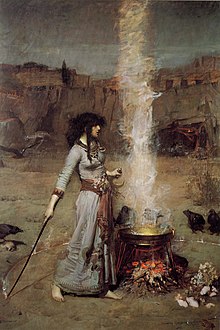
Witches are not Satanic, and do not practice "black" magic. They follow religious laws. The first is the Rule of Three, which is primarily a Wiccan law. This rule states that anything you do will come back to you three times greater. So, if you do a love spell to gain a lover that is already with someone else, three future partners will leave you for someone else. Another law is the Wiccan Rede, which states "an it harm none, do what ye will". To translate, it means "you can do what you like, as long as it doesn't bring harm or trouble to another person". Others believe in Karma, which is every action has a single consequence or reward. Also, in my opinion, there is no "white" or "black" magic. All magic is grey, neutral. It takes intent and outcome to make it "black" or "white".

While we're on the Satanic idea, most witches do not worship Satan. Some are Wiccan, some are members of other Pagan faiths, some are atheists, and some are even Christians. Witchcraft is a tool that can be used by anyone, regardless of their religion.

Witches, also, do not deal with demons. Some believe in them, some don't. But no witch I know will deal with a negative entity, regardless of the name given to it.

With the exception of Traditional Scottish Witchcraft, warlocks are not male witches. The word witch is actually gender-neutral. The accepted etymology (the study of the history and origin of words) of the word Warlock is the Old English word wǣrloga, which means "oath-breaker" or "deceiver". In traditions other than Scottish, the word is used to describe someone that betrayed other witches or an entire coven.

Cottage witches, kitchen witches, garden witches, green witches, hedge witches and hearth witches are examples of different kinds of witches. There are probably others I missed or have not heard of at this time.

Actual spells and rituals vary from witch to witch, depending on their personal views. The religion one might follow dictates certain rules. Sometimes even down to the tools used, and the clothing worn. The rituals can also vary, depending on if there are minors in attendance.

All in all, witches tend to be good people. They live within the boundaries of society and the law. You probably wouldn't even know one if you saw one on the street, as most keep their religion to themselves. All they want is to be allowed to live without persecution from the majority faiths.

Wednesday, March 16, 2011

What is Paganism, exactly?


Paganism, according to the dictionary, is any religion non-Abrahamic in faith. In other words, if you're not an atheist, Christian, Muslim, Jew or Satanist then you would fall under the Paganism category.

It was in the first few hundred years of Christianity that the term "pagan" was first used. While the emperors, monarchs and nobility converted to Christianity the commoners remained loyal to the religion of their ancestors. It was first coined in the Roman empire as the Latin word "paganus", which literally meant country-dweller. It wasn't long until those in power began to vilify the old religions and paganus became a slur. Even the Jews, who Christianity came from, were labeled as evil.

Now, even though it's still vilified by the Christians, people are returning to the ways of their ancestors. This is where things get really confusing. There are hundreds, if not thousands, of faiths that can identify as pagan. In later posts, I will go into some of the religions I have done research on as well as the one I follow.

Tuesday, March 15, 2011

Types of religious stories

There are several kinds of religious (a.k.a. mythological) stories. Because of the amount of time between when the stories began, and when they were written down, many will overlap. Some may even have elements of all four.

  1. Fantasy
    These stories were invented purely for entertainment purposes. There is as much reality in them as there is in the Harry Potter series.

  2. Fable
    These stories were invented to teach children, and older newcomers to the society, how to live peacefully with the group

  3. History
    These stories have a basis in something that really did happen long ago. But, like a giant rumor mill, these stories changed. Some things were added, and others forgotten. It is a challenge to find the truth among the fiction.

  4. Science
    Now, I do realize that these stories are rarely scientifically accurate. I do, however, understand what our ancestors might have thought. They saw things happening around them, and created a story to explain the why and how. It is no longer science, because we have (for the most part) discovered what's really going on. But they do give insight into how people thought thousands of years ago.

Label Cloud

101 2011 2012 44 days of witchery ability activism agnosticism air alberta altar ancestor anubis apatheism apocalypse apollo aquarius arachne arts athame atheism athena autotheism autumn banner beliefs bigotry bottle burning times calendar canada candle celtic child children's christian christmas cleaning coexist common man correspondences crafts creation cryptozoology cycle dalai lama deism deity deity of the month demeter deucalion E3 egypt electronic entertainment expo electronics elements end of the world endymion equality equinox extinction feast festival festivus fires flood food fur g4 gaea gaming germany glass god goddess great flood great spirit greek green griffin halloween hanukkah health henotheism herbalism history holiday holidays hospitality instructions international internet irish italian jack o'lantern kathenotheism kwanzaa lakota lavender leather life luna magic magical place makoshika meatless monday microsoft minerva mjöllnir monolatrism monotheism mothers mythology native american nature norse oil oisin ostara pagan pagan values month paganism pandeism panentheism pantheism pelops pepitas persephone philosophy pipa pirate politics poll polydeism polytheism prayer prayer chain preternatural prophecy pumpkin pyrrha rant Recipes religion religious roman rules sabbat sacred element samhain saturnalia seasons seeds selene shrine sioux sol invictus solstice sopa spider spiritual element spiritualism spring stories sun sign sword of truth symbol tantalus thor three tir na nog tools triad trials trio triskele values vegan vegetarian veneration viking vinegar warlock water wax wheel wheel of the year wicca winter witch witchcraft wizard xenia year yule

Popular Posts