Showing posts with label equinox. Show all posts

Friday, September 23, 2011

Autumn Equinox

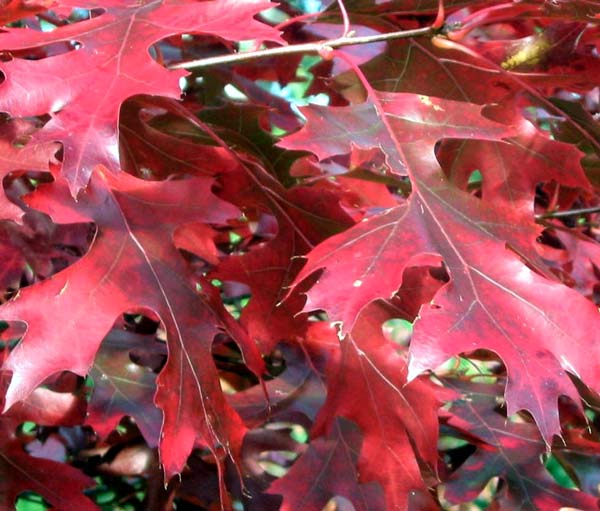
The Autumnal Equinox is the second time of the year when day and night are equal in length, the other being the Spring Equinox. The leaves are beginning to turn, except for the evergreen plants, and the birds are beginning to migrate south (or, at least the ones that are less tolerant of colder weather).

It is in our nature to begin to slow down at this time of year. Especially those of us who are of northern European descent. It gets very cold in the northern parts of the world, and conservation of energy is important. We need the energy to help keep us warm in sub-zero temperatures.

Once the harvest is done, there is still work to do. This is the time to can food, or freeze it, so extra is available during the cold winter. Even though humans (for the most part) no longer rely on storing everything we need over the winter, it is still a good idea to have a lot stored. If there's a natural disaster (such as a blizzard) that prevents you from going to the store to get food, you already have plenty on hand.

This time of year is associated with Persephone returning to her husband, while her mother begins to neglect the duties she is commanded to perform.

Sunday, March 20, 2011

Spring Equinox

As mentioned in a list of the eight Sabbats, the Spring Equinox is today. There are many different ways to celebrate, depending on your religion.

Personally, if it's not still winter here in Montana, I take a walk and enjoy the smell of new life that is distinctive after a long, bitter winter. The days are getting noticeably longer (even without the irritating time change) and I'm even able to open a window and let some fresh air inside my apartment.

This is one of two days in the year when the amount of daylight is the same as the amount of darkness. Ancient people in the modern day countries of Germany, Poland, Russia, Norway, Sweden, etc. noticed this and made a special day for it.

The term Ostara is a modification of the name of the Goddess Eostar, who was a patron of spring. She is most often seen as an older maiden or young mother figure, wearing white. Bonfires were a frequent part of the celebration of this holiday.

Pagans share a celebration of the theme of death and rebirth with the Christian Easter (guess where they got that name, by the way). Ancient Pagans who worshiped Cybele held a ritual for her consort, Attis. He was believed to die and be reborn at this time during the spring.

Another ancient story is also a Greek one. Demeter, who was responsible for the harvest and the change of the seasons, never allowed a season of death (winter). Then her daughter, the personification of Spring itself, was kidnapped by Hades to be his wife. In her grief, she ignored her duties and the first winter arrived in Greece. Zeus was uncharacteristically worried about the mortals and animals, and forced Hades to return Persephone. But, before he returned Persephone to Demeter, Hades tricked the young Goddess into eating food of the afterlife. Eating this food meant she was forced to live with Hades. Hermes, however, found a loophole. Since Persephone only ate half of the fruit, she was only required to live with Hades six months out of the year. The Spring Equinox is when Persephone returns to Demeter, resulting in Demeter returning to her duties and bringing Spring back to the world.

Thursday, March 17, 2011

Wheel of the Year

The "Wheel of the Year" is a Pagan term for the cycle of seasons throughout the year. The Sabbats, or Holidays if you prefer, themseves are a mix of Gaelic (otherwise known as Celtic) and Germanic pre-Christian feasts and festivals. The two cultures have been blended nicely, and is important to many people both ancient and modern.

The cycle itself is seen as an echo of life itself. Birth is the spring, life is the summer, decline is the fall, and death is the winter. Sometimes the seasons are even referred to in this way. With Wiccans, they also see the progression of the God and Goddess through the year.

There are eight Sabbats on this calendar. Four fall on the solstices and equinoxes, and are loosely based on or named after Germanic festivals. The other four fall roughly halfway between them, and are inspired in the same way on Gaelic festivals. Different groups put emphasis on different Sabbats, and celebrate them in different ways. Sometimes the festivals are very different from historic accounts of the festivals in pre-Christian Europe.

 Unless the religion you are a member of demands you celebrate every one, each Sabbat is optional. Personally, I celebrate five of them.

I will go into greater detail with each Sabbat as they occur throughout the year.


  1. Samhain is also called All Hallow's Eve, Last Harvest, Blood Harvest, Ancestor Night, Feast of the Dead, Nos Galan Gaeaf, and Halloween.

  2. Yule is also called Midwinter, Cuidle, Alban Arthan, Winter Rite, Mother's Night, and Gŵyl Galan Gaeaf.

  3. Imbolc is also called Candlemas, Oimelc, Brigit, Brigid's Day, Bride's Day, Brigantia, and Gŵyl y Canhwyllau.

  4. Ostara is also called Vernal Equinox, Lady Day, Earrach, Alban Eilir, Festival of Trees, and Gŵyl Canol y Gwanwyn.

  5. Beltane is also called Beltaine, May Day and Gŵyl Galan Mai.

  6. Litha is also known as Midsummer, Samrad, Alban Hefin, Aerra Litha, and Gŵyl Ganol yr Haf.

  7. Lammas is also known as Lughnasadh, First Harvest, Bread Harvest, Festival of First Fruits, and Gŵyl Galan Awst

  8. Mabon is also known as Autumnal Equinox, Foghar, Alban Elfed, Harvest Home, Second Harvest, Fruit Harvest, Wine Harvest, and Gŵyl Ganol yr Hydref

Label Cloud

101 2011 2012 44 days of witchery ability activism agnosticism air alberta altar ancestor anubis apatheism apocalypse apollo aquarius arachne arts athame atheism athena autotheism autumn banner beliefs bigotry bottle burning times calendar canada candle celtic child children's christian christmas cleaning coexist common man correspondences crafts creation cryptozoology cycle dalai lama deism deity deity of the month demeter deucalion E3 egypt electronic entertainment expo electronics elements end of the world endymion equality equinox extinction feast festival festivus fires flood food fur g4 gaea gaming germany glass god goddess great flood great spirit greek green griffin halloween hanukkah health henotheism herbalism history holiday holidays hospitality instructions international internet irish italian jack o'lantern kathenotheism kwanzaa lakota lavender leather life luna magic magical place makoshika meatless monday microsoft minerva mjöllnir monolatrism monotheism mothers mythology native american nature norse oil oisin ostara pagan pagan values month paganism pandeism panentheism pantheism pelops pepitas persephone philosophy pipa pirate politics poll polydeism polytheism prayer prayer chain preternatural prophecy pumpkin pyrrha rant Recipes religion religious roman rules sabbat sacred element samhain saturnalia seasons seeds selene shrine sioux sol invictus solstice sopa spider spiritual element spiritualism spring stories sun sign sword of truth symbol tantalus thor three tir na nog tools triad trials trio triskele values vegan vegetarian veneration viking vinegar warlock water wax wheel wheel of the year wicca winter witch witchcraft wizard xenia year yule

Popular Posts